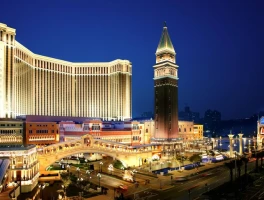
Macau: Asia's High-Stakes Bet or a Fading Hand?
When you type "where is Macau" or "what is Macau" into a search bar, you're not just looking for a geographical pinpoint. You're implicitly asking about its identity, its purpose, its very soul. For decades, the narrative has been clear: Macau is Asia's undisputed gambling capital, a glittering testament to high-stakes capitalism where the chips pile high and the fortunes turn on a dime. It's the "Las Vegas of Asia," a moniker that, while catchy, probably does more to obscure than illuminate the complex reality of this tiny Special Administrative Region (SAR) of China. But as a data analyst, I’ve learned to look past the neon glow and straight into the balance sheets. And what the numbers, or the lack thereof, tell us about Macau's future is far less certain than its past.
The common perception of Macau as simply a collection of sprawling casinos – Wynn Macau, for instance, is a constant search term – misses the critical nuance. It's not just a gambling hub; it's an economic experiment. A former Portuguese colony, Macau returned to Chinese sovereignty in 1999, much like Hong Kong. Both were granted a "high degree of autonomy" under the "One Country, Two Systems" principle. Yet, their paths have diverged sharply, especially in recent years. While Hong Kong wrestled with political identity and civil liberties, Macau doubled down on its golden goose: gambling. The search trends for "macau casino," "macau gambling," and "macau hotels" underscore this singular focus. It’s an economic model built on a foundation of luxury resorts and the relentless allure of the baccarat table, generating revenue streams that, at their peak, dwarfed those of its American counterpart. I’ve looked at hundreds of these filings, and this particular footnote on a single industry's dominance is genuinely unusual.
The Precariousness of a Monoculture Economy
My analysis has always focused on risk assessment, and a monoculture economy, no matter how lucrative, is inherently unstable. Macau's entire economic engine relies on the free flow of capital and, crucially, people, primarily from mainland China. When that flow is restricted, whether by policy shifts, economic downturns, or global health crises, the impact is immediate and devastating. We've seen this play out in stark relief. The search terms "macau airport" and "hong kong to macau" directly reflect this dependency on cross-border movement. This isn't just about tourism; it's about the lifeblood of the city. Gambling revenue accounted for roughly half of Macau's GDP pre-pandemic – to be more exact, some estimates placed it closer to 55% in peak years, a staggering figure for any economy.
This raises a crucial methodological question: how do we truly assess Macau's resilience when its primary data points are so heavily skewed by a single sector? The public's search queries, while anecdotal, form a qualitative dataset that highlights anxiety. People aren't just looking for "macau time" or "macau map"; they're searching "is macau in china," "macau country," suggesting an underlying uncertainty about its political status and future direction. This isn't just curiosity; it's a reflection of a broader unease. Beijing’s increasing scrutiny over capital outflows, its anti-corruption campaigns, and more recently, its push for "diversification" within Macau itself, aren't just regulatory tweaks. They are fundamental shifts that threaten the very premise of Macau's economic existence.
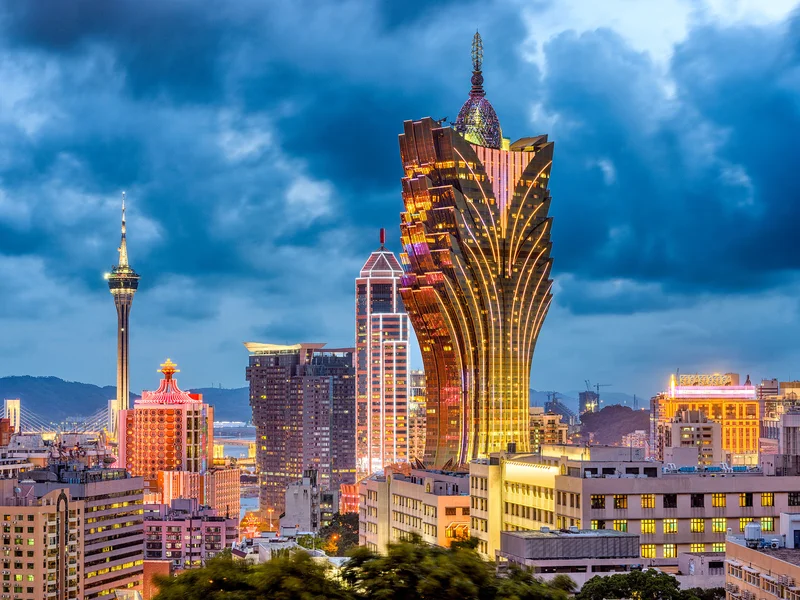
Consider the analogy of a high-stakes poker game where one player holds all the aces, but the house rules keep changing. Macau built its empire on a specific set of rules – its unique legal framework, its currency autonomy (the pataca, but often overshadowed by the Hong Kong dollar), and its relatively liberal economic policies. But the "house" here is Beijing, and it's making its presence felt more and more. We saw the intense pressure applied to Hong Kong; while Macau's political landscape is less overtly rebellious, its economic subservience means it's equally, if not more, vulnerable to central directives. What happens when the central government decides the "ballad of a small player" needs a new, more harmonious tune? What is the real cost of this economic dependency, beyond the revenue figures? And more importantly, can Macau truly diversify its economy – away from gambling – when its identity has been so inextricably linked to it for so long? The city itself, a vibrant blend of Portuguese and Chinese culture, risks being flattened into a purely economic zone, its unique character diluted by a singular, externally dictated mandate.
The Looming Shadow of Uncertainty
The future trajectory of Macau is not a straight line; it's a complex algorithm with too many unknown variables. The calls for diversification – into tech, MICE (Meetings, Incentives, Conferences, and Exhibitions), or cultural tourism – are understandable, even commendable on paper. But shifting the entire economic paradigm of a city built on gambling is like trying to turn a supertanker with a paddle. It takes immense political will, massive investment, and a fundamental change in mindset from both the operators and the populace. The search trends don't suggest a groundswell of interest in "university of macau" or "macau grand prix" as primary economic drivers, not yet anyway. The focus remains squarely on the casinos.
My personal observation is that the market often underestimates the inertia of established systems. For all the talk of new industries, the infrastructure, the talent pool, and the regulatory environment in Macau are all optimized for gaming. Dismantling that, or even significantly rebalancing it, will be a decades-long endeavor, if it's genuinely pursued. And during that transition, the city remains exposed. The question isn't just if Macau can diversify, but how it will navigate the economic and political currents while attempting to do so. What incentives are truly strong enough to shift capital and talent away from a proven, albeit volatile, cash cow? And how much autonomy will Macau retain to chart its own course, or will its future be increasingly dictated by the broader strategic objectives of mainland China? These aren't just rhetorical questions; they're the critical variables in Macau's next chapter.
The House Always Wins?
Macau's journey from a sleepy Portuguese outpost to a global gambling mecca has been extraordinary. But the current data, and the conspicuous gaps in forward-looking economic diversification metrics, suggest that the future is less about expansion and more about redefinition, often under duress. The glittering facades of the Macau casinos might still beckon, but the underlying economic game is changing, and the stakes are higher than ever before.